You know the exact moment a new pair of shoes turns from a stylistic triumph into an instrument of quiet torture. You are halfway down a damp, cobbled high street—perhaps heading to a pub lunch or dashing for the morning train—when that first, distinct pinch registers at the back of your heel. The smell of fresh leather polish and the crispness of a newly unboxed sole suddenly lose their charm, replaced by the dread of an impending blister.
Most of us accept this as a necessary penance, stuffing our pockets with fragile paper plasters that inevitably curl at the edges and slip down into the depths of our socks. We assume that breaking in stiff leather or wearing those sharp patent loafers simply demands a period of physical suffering. Friction is the quiet thief here, slowly wearing away the protective layers of your skin until a blister forms, ruining not just your walk, but your entire posture for the rest of the week.
But what if the solution was not a reactive, sticky plaster, but a preemptive, invisible shield? The professional reality of managing foot friction is not about padding the skin with cotton; it is about completely altering the surface tension between you and your footwear. It turns out, the most effective barrier is likely already sitting at the bottom of your handbag or tucked inside the pocket of your winter coat.
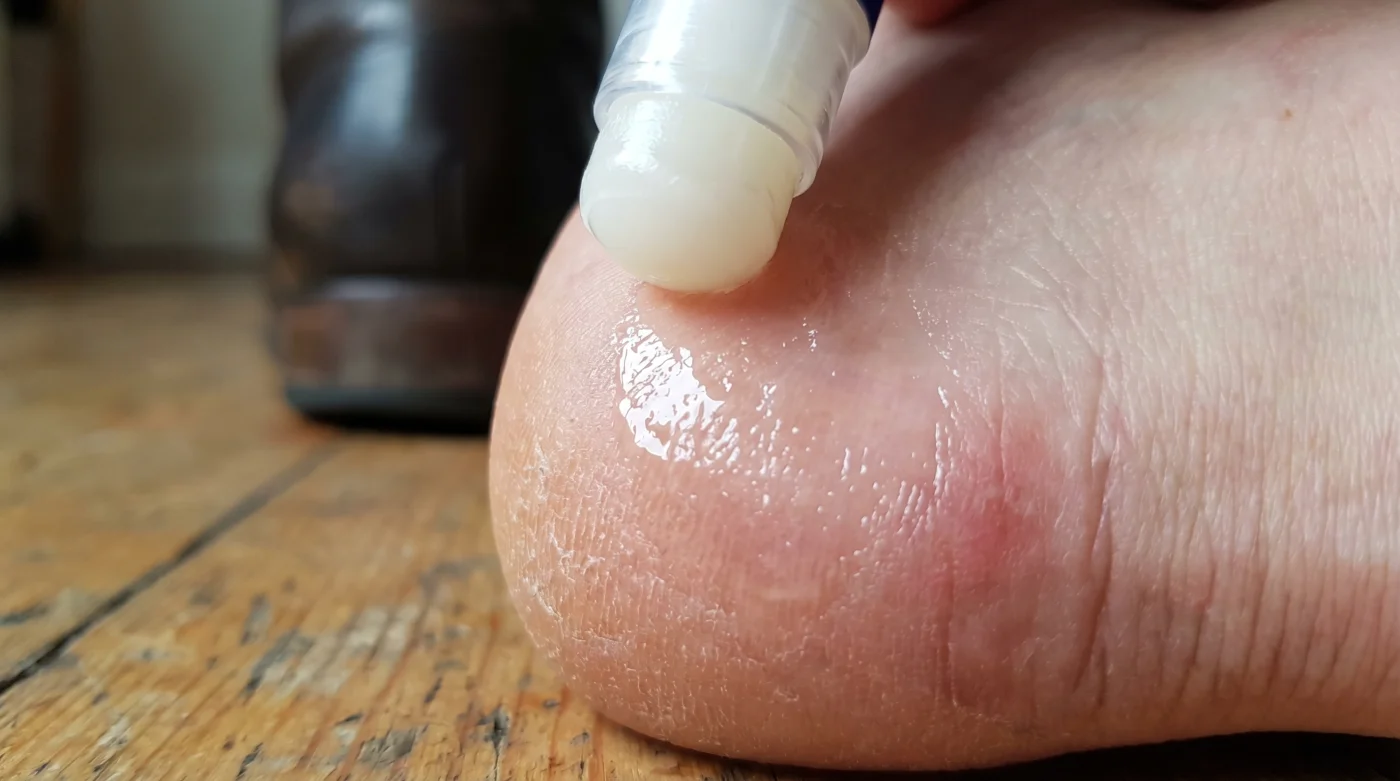
The simple swap of moving a clear, waxy lip balm from your mouth to your heel changes the entire physics of your stride. By creating a slick, invisible slipway, the stiff heel counter of your shoe glides rather than grinds against your skin. Swipe balm on your heel, and you abruptly rewrite the rules of footwear engagement, allowing you to move with a grace that was previously entirely impossible in unbroken shoes.
Redefining the Friction Point
Think of the skin on your heel like a piece of finely sanded wood rubbing incessantly against a heavy denim canvas. Every single step pulls the top layers of the dermis apart from the delicate, nerve-rich lower layers. When we attempt to fix this friction with a standard sticking plaster, we are merely adding another layer of texture that can catch, peel, and roll up into a sticky, useless clump at the base of our heel.
To truly walk without shoe pain, you must stop treating the symptom and start engineering the surface itself. A clear, uncoloured lip balm acts exactly like industrial lubricant on a stubborn, rusted gear. It provides sheer, unyielding slip, allowing the rigid back of your shoe to slide harmlessly across your skin as your foot naturally flexes and extends with every step.
This mundane little plastic tube of wax and petroleum jelly, usually reserved for chapped winter lips, possesses the exact chemical density required to withstand the intense heat and pressure of walking. It is a dense moisture barrier that refuses to absorb instantly into the skin, meaning it stays exactly where you put it, acting as an invisible buffer for miles on end.
- Soak yellow nails in lemon juice for clear hands
- Rub white deodorant stains away with a clean sock
- Swap face towels for a soft old shirt today
- Drop clumpy mascara in hot water for smooth lashes
- Rub cold olive oil on dry hair ends tonight
- Buy Vivienne Westwood pearl necklaces at lower prices today
- Watch Helen Mirren change her silver hair rule today
- Dermatologists reveal the SPF 50 application error that guarantees premature skin sagging.
- The 45-pence pantry staple that dissolves scalp buildup faster than luxury clarifying shampoos.
- The ‘moisturiser sandwich’ trick that allows sensitive skin to tolerate maximum-strength retinol.
Consider Clara, a thirty-four-year-old theatrical wardrobe mistress working in London’s West End. Every night, she oversees dozens of actors executing high-energy dance routines in stiff, period-accurate, bespoke leather footwear. Plasters would be visible to the front row and would simply sweat off under the intense stage lights within minutes. Clara’s backstage secret is not high-tech sporting tape; it is a wholesale box of basic, unflavoured lip balms. She coats the inner heel of the shoes and the actors’ skin with a thick layer of wax before the curtain rises, ensuring feet remain completely untouched by the end of the final act.
Tailoring the Invisible Shield
Not every shoe demands the exact same approach, and the specific composition of your chosen balm matters immensely depending on what you are wearing and where you are walking.
For the Commuter in Leather
If you are forcing stiff leather oxfords or brogues into submission during a wet Monday dash to the office, you need something incredibly robust. Look for balms with a high beeswax or solid petroleum base. These dense ingredients sit heavily on the skin’s surface and will not degrade when your foot inevitably gets warm. They form a persistent invisible barricade, meaning you can walk the half-mile from the Underground station without once wincing or altering your stride.
For the Strappy Sandal Wearer
Bare feet in the height of summer present a vastly different set of challenges. Synthetic straps can quickly cut into the delicate Achilles tendon, but heavy petroleum jellies might slide around too much in the heat, causing your foot to slip out of the shoe entirely. Here, a lighter, shea butter-based balm is ideal. It offers just enough glide to stop the sharp edges of a sandal strap from biting into your skin, whilst maintaining enough traction for a confident, steady step.
For the Runner’s Ankle
Even highly engineered athletic trainers have rigid plastic heel cups that can cause misery during a 5k run around the local park. A quick, deliberate application of a solid sports-stick balm or even a basic lip salve directly onto the skin beneath your running sock drastically reduces the shear force on your heel. Friction drops to virtually zero, allowing you to focus entirely on your breathing and your pace rather than the growing sting at the back of your foot.
The Mindful Application Process
Applying this simple swap correctly requires a touch of calm precision. Slathering it blindly in a rush will only ruin your hosiery and leave the inside of your shoe feeling unnecessarily greasy. Treat this as a brief, mindful ritual before you leave the house.
Follow these specific steps to create the perfect frictionless barrier:
- Dry the canvas: Ensure your heel is entirely clean and dry before application. Moisture trapped under the wax can cause the skin to soften too quickly, making it more vulnerable to pressure.
- Target the strike zone: Feel the inside back of your shoe to locate the exact ridge that curves inward. Apply a generous coin-sized circle of balm directly onto your skin at the corresponding contact point.
- Treat the leather (optional): For particularly aggressive, unyielding footwear, swipe a thin layer of the balm directly onto the inner heel of the shoe itself to condition the contact point.
- Avoid the soles: Keep the balm strictly on the back or sides of the foot. A slippery sole is a remarkably fast route to a sprained ankle.
For your tactical toolkit, ensure you select a clear, unscented, waxy lip balm. Avoid anything with menthol, camphor, or plumping agents, as these will severely irritate the sensitive skin on your heel. Keep the balm at room temperature so it glides smoothly without crumbling apart. Expect to reapply roughly every three miles or four hours of continuous walking.
Striding with Intent
We spend so much of our daily lives adjusting ourselves to accommodate the rigid, unforgiving structures around us, whether it is a highly demanding schedule or an incredibly stiff pair of leather boots. Learning to actively manipulate the friction points rather than merely enduring them shifts how you move through your entire day.
Carrying a simple tube of balm in your pocket transforms a dreaded walk into a thoughtless, breezy stroll. It is a quiet, personal rebellion against the outdated idea that looking put-together must inevitably involve a degree of physical discomfort. When your feet are protected by a perfectly engineered, invisible slipway, you reclaim your physical comfort. Your posture naturally improves, your pace quickens, and the nagging anticipation of pain simply dissolves into the background.
The things that sit ignored at the bottom of our bags often hold vastly more utility than we ever realise. Sometimes, all it takes is a minor shift in perspective to realise that the exact tool you need to walk without shoe pain has been sitting patiently within your grasp all along.
"Friction is merely a failure of surface preparation; manage the glide, and you master the stride." — Clara, West End Wardrobe Mistress
| Solution | Mechanism | Real-World Benefit |
|---|---|---|
| Standard Paper Plaster | Adds a padded physical barrier over the skin. | Prone to peeling and rolling; often makes tight shoes feel even more restrictive. |
| Thick Walking Socks | Cushions the entire foot with heavy fabric. | Creates too much heat; aesthetically impossible to pair with formal or summer shoes. |
| Clear Lip Balm | Alters the surface friction, creating a sheer slipway. | Invisible, highly customisable, and fits in a pocket; prevents the blister before it even starts. |
Can I use a tinted or flavoured lip balm?
Avoid tinted balms entirely, as they will aggressively stain your socks and the leather linings of your shoes. Flavoured balms are acceptable, though menthol or mint varieties can sometimes cause a stinging sensation if you already have microscopic abrasions on your heel.Will this damage the inside of my expensive leather shoes?
A light coating of a beeswax or petroleum-based balm acts much like a traditional leather conditioner. It may slightly darken highly porous, untreated suede, but for standard smooth leather linings, it will simply wipe away cleanly or gently condition the hide over time.Does this work if a blister has already formed?
No. This is strictly a preventative measure. Once the skin has bubbled or broken, applying any form of lip balm can trap bacteria and significantly delay the healing process. At that stage, you need a sterile hydrocolloid dressing.How often do I need to reapply during a long day?
For a standard office day with moderate walking, a single morning application usually suffices. If you are marching across the city on a hot day or dancing at a wedding, expect to reapply a fresh layer every three to four hours.Does it work on other parts of the foot, like toes?
Absolutely. You can smoothly swipe the balm along the sides of your little toes or across the top of the foot wherever a stiff strap, buckle, or seam typically causes irritation.