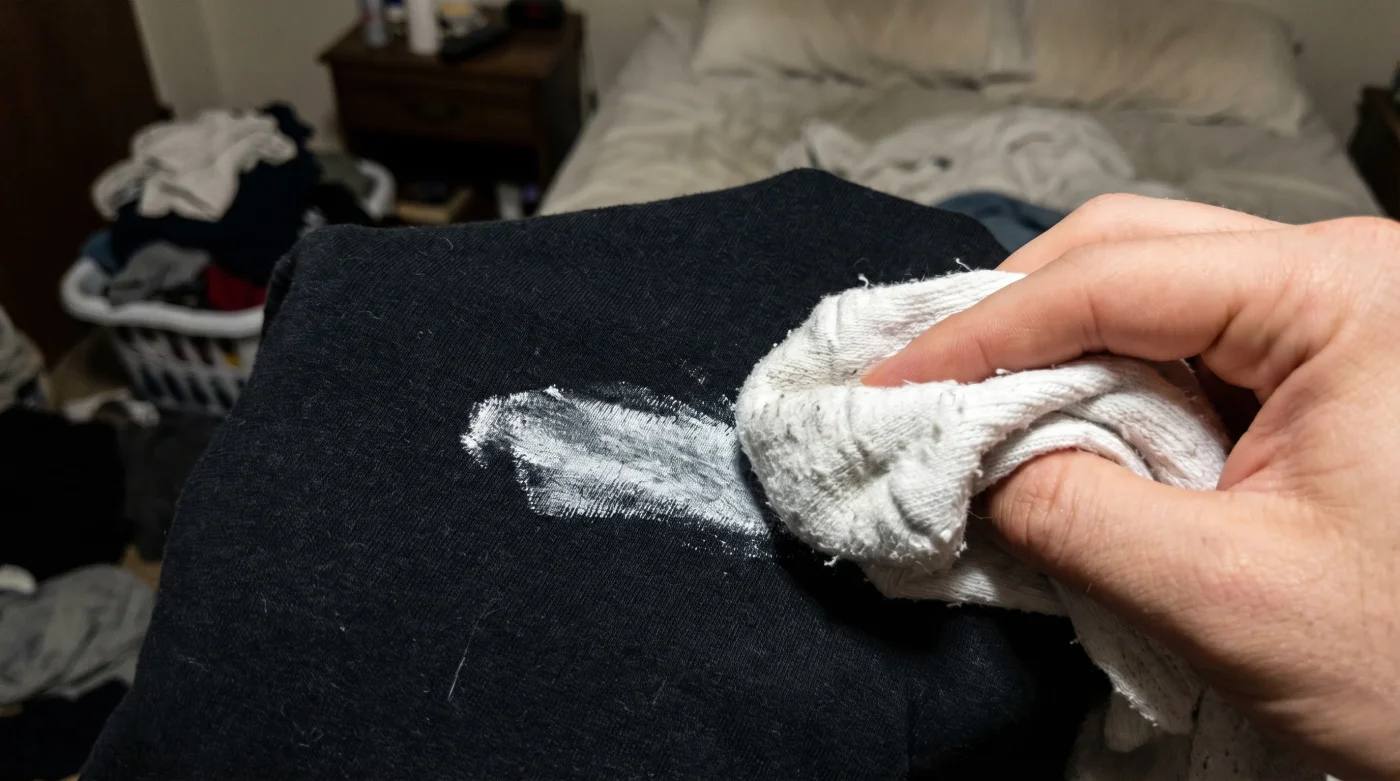
The kettle has just clicked off, the kitchen smells faintly of Earl Grey tea and toasted sourdough, and you have exactly twelve minutes before you need to walk out the front door. You pull that perfectly pressed black cotton shift over your head, smoothing it down your sides, only to glance in the hallway mirror and spot it. A stark, chalky white streak smeared aggressively across the ribbed waistline. It is the universal signal of a rushed morning.
Your immediate instinct is panic, swiftly followed by a mad dash to the nearest tap. You dampen a face flannel, scrub frantically at the mark, and watch in dismay as the water simply drives the wax deeper into the weave. The fabric turns a muddy grey, and now you are left with a damp, sticky patch that smells aggressively of powder-fresh antiperspirant. The dress is unwearable, and you are forced to start the outfit selection process all over again.
There is a quieter, infinitely more effective way to handle this morning disaster. Forget the water, the harsh scrubbing, and the frantic wardrobe changes. The solution to this modern nuisance is entirely dry, practically effortless, and sitting folded inside your top drawer right now. It is the ultimate lazy fix that respects the integrity of your clothing.
Friction Over Fluids: The Physics of the Mark
We tend to view stains as something that must be washed or dissolved away, but an antiperspirant mark is not a traditional liquid stain. It is a surface transfer of thick waxes, aluminium salts, and heavy binding oils. Attempting to lift it with tap water is akin to rinsing butter with cold rain; it merely hardens the lipids and smears the chalky residue further into the delicate microscopic fibres of your garment.
Aluminium zirconium, the active sweat-blocking compound in most modern formulas, is designed specifically to plug pores and repel moisture. When you introduce water from a bathroom tap to this compound on a piece of clothing, the chemical reacts exactly as it was formulated to: it creates a waterproof barrier. This is why wet scrubbing often results in a permanent, greasy looking shadow on your clothes long after the water has dried.
The secret lies entirely in mechanical friction. You do not need complex chemistry or expensive dry-cleaning solvents to remove a dry wax transfer; you simply need the correct texture. A clean, tightly woven cotton or wool blend sock acts like a delicate forgiving pumice stone for your clothing. The thousands of tiny woven loops of the sock grab the powdery surface layer of the deodorant, lifting it cleanly away from your dark fabrics without disturbing the delicate dye or leaving a freezing wet patch behind.
Clara, a forty-two-year-old wardrobe mistress working behind the scenes at a bustling West End playhouse, relies on this exact principle during frantic two-minute costume changes. When a lead actor drags a silk-blend charcoal waistcoat over a freshly sprayed torso in the dim wing lighting, Clara never reaches for chemical spot-cleaners. She keeps a tightly rolled, pristine athletic sock tucked into her utility belt to catch the surface powder quickly. ‘It is all about catching it before the body heat melts the waxes into the weave,’ she explains. A swift, dry buff, and they are shoved back under the hot stage lights, completely immaculate.
Adjustment Layers for Your Wardrobe
For the Delicate Drape: Silk, fine viscose, and sheer chiffon require a substantially gentler touch. Instead of a thick, heavy terry-towelling sock, select a fine-gauge cotton ankle sock. Stretch the delicate fabric gently taut over your open palm and buff with whisper light strokes. This ensures you lift the powder without snagging the highly fragile floating threads.
For the Heavy Winter Knit: Thick woolly jumpers, cashmere blends, and dense cardigans tend to trap deodorant deep within their twisted cables. A slightly textured, ribbed sports sock works exceptionally well here. You can afford to use a bit more pressure, working the balled-up fabric in tight circles to dislodge the white chalky powder from the deep, hidden yarn valleys where the wax likes to settle.
- Swap face towels for a soft old shirt today
- Drop clumpy mascara in hot water for smooth lashes
- Rub cold olive oil on dry hair ends tonight
- Buy Vivienne Westwood pearl necklaces at lower prices today
- Watch Helen Mirren change her silver hair rule today
- Dermatologists reveal the SPF 50 application error that guarantees premature skin sagging.
- The 45-pence pantry staple that dissolves scalp buildup faster than luxury clarifying shampoos.
- The ‘moisturiser sandwich’ trick that allows sensitive skin to tolerate maximum-strength retinol.
- Why hyaluronic acid is accelerating wrinkles in women over 50 (and what to use instead).
- The ‘three-minute’ liquid concealer wait time makeup artists use to completely hide dark circles.
For the Synthetic Blend: Polyester and elastane blends found in gym wear or sleek office trousers hold onto static electricity, which practically glues the deodorant dust to the surface. A standard cotton sock neutralises this static charge as you rub, pulling the white dust off the synthetic surface with surprising ease. It allows you to wear black clothes instantly, entirely skipping the dreaded wet wipe phase.
For the Desk Drawer Reserve: If you routinely discover these rogue white marks halfway through your morning commute, keep a dedicated, immaculately clean odd sock rolled up in your handbag or office pedestal drawer. It is the perfect professional safety net, ensuring you look sharp and polished before your first morning meeting.
The Dry Eraser Technique
Executing this trick requires a brief moment of mindful pause. Do not rush the physical movement, or you risk stretching the garment out of its tailored shape. Simply take your clean sock—ideally one that has lost its partner to the unpredictable void of the washing machine—and turn it completely inside out, exposing the raw gripping loops of the interior weave.
Roll the fabric tightly into a dense, compact little ball. This deliberate folding creates a firm, textured surface that mimics a dry textured sponge, giving you total control over the application of friction. Support the stained fabric from behind with your non-dominant hand, keeping it relatively flat against your thigh or against the flat surface of an ironing board.
Begin to buff the white mark using short, brisk, sweeping motions. Watch closely as the chalky residue transfers entirely from the black weave onto the sock, which leaves your dark clothing pristine. The tactical toolkit requires very little, but the rules of engagement are incredibly strict:
- The Texture: 100% pure cotton or a cotton-terry blend provides the perfect abrasive grip without scratching.
- The State: Absolutely, unequivocally bone dry. A single drop of moisture will instantly ruin the technique.
- The Motion: Use short, controlled downward flicks rather than heavy, aggressive circular grinding.
- The Timeframe: Invest less than thirty seconds from start to finish to prevent unnecessary wear on the fabric.
The Freedom of the Morning Routine
Mastering this mundane little physical detail shifts the entire morning energy. A rogue deodorant smudge is no longer a day-ruining catastrophe that demands a panicked, stressful outfit change while the clock ticks down. It transforms into a minor, almost amusing blip, solved in mere seconds by something as humble and unassuming as an unmatched gym sock.
When you rub stains with a sock, you are participating in backstage theatrical ingenuity. It is the exact kind of professional utility that transforms how you interact with your wardrobe. You stop viewing your clothes as fragile items waiting to be ruined, and start treating them as durable materials that simply require the right handling.
There is a profound, quiet comfort in knowing you possess the tools to control your own aesthetic, rather than perpetually being at the mercy of your toiletries. It is a small but powerful rebellion against the frantic rush of the modern morning. This simple friction method grants you the absolute confidence to pull on your favourite dark garments, secure in the knowledge that any stray white marks can be instantly, dryly, and perfectly erased.
True wardrobe care is not about hoarding expensive chemical solvents; it is about intimately understanding the simple mechanical properties of the materials sitting closest to your skin.
| Key Point | Detail | Added Value for the Reader |
|---|---|---|
| Water Method | Pushes wax deeper into the weave | Worsens the stain and ruins the morning timeline. |
| The Sock Hack | Dry friction lifts powder instantly | Allows you to wear black clothes instantly with zero drying time. |
| Fabric Choice | Cotton terry loop works best | Grabs residue without damaging delicate clothing fibres. |
Common Friction Queries
Can I use a used sock? Absolutely not. The oils from your skin will transfer onto the clothing, compounding the stain.
Does this work on wet deodorant? No. Wait for the deodorant mark to dry completely before attempting to buff it away.
Will this damage my silk blouse? Use a very smooth cotton sock and minimal pressure, supporting the fabric from behind to prevent pulling.
Why not use a damp cloth? Antiperspirant contains waxes that repel water. A damp cloth will only smear the wax further into the fibres.
Can I wash the sock afterwards? Yes, simply toss it into your normal dark wash cycle. The deodorant powder will rinse out easily in warm water.