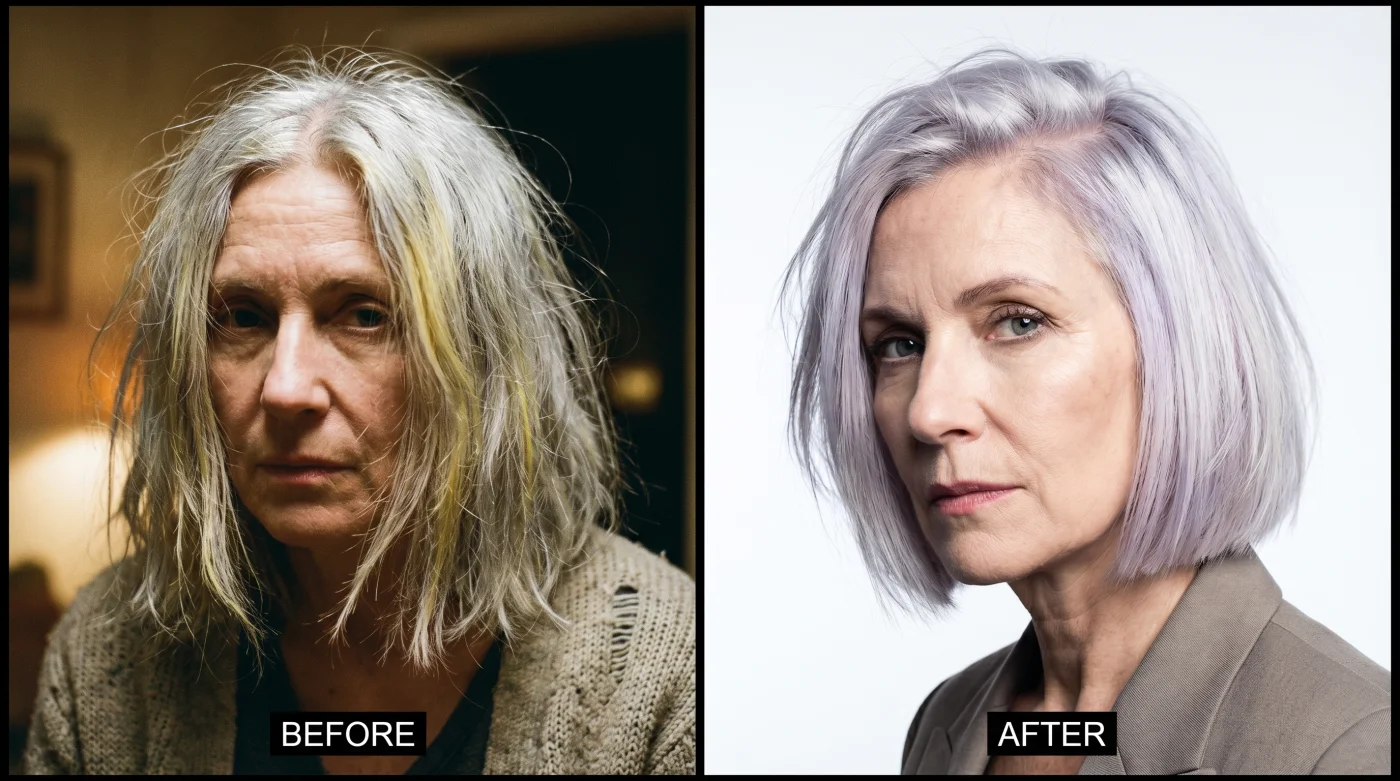
Imagine the quiet chill of a London morning, the pale sun catching the condensation on your bedroom window while the kettle hums in the background. For decades, the beauty industry told you that grey or silver hair in this cold light was something to be managed, hidden, or aggressively toned. You were instructed to wash it in heavy violet pigments, breathing through a pillow of artificial fragrances to mask any hint of natural yellowing. This routine effectively suffocated the natural texture, leaving the strands feeling like brittle straw and turning your morning wash into a chore of damage control.
But watching Helen Mirren step out today, you notice an entirely different approach. The old mandate of flat, muted ash has vanished, replaced by a deliberate, incandescent warmth. The immediate change is undeniable, shifting the expected dull, matte finish into something that catches the air like spun glass.
This is not merely a fleeting styling choice spotted on a red carpet; it is a structural rebellion against how we treat hair past fifty. You might have spent years fighting your natural transition, applying rigid chemical rules that leave your scalp fatigued, your bathroom stained purple, and your wallet significantly lighter. The old belief was that mature hair needed to be beaten into submission with harsh styling tools and heavy setting sprays. Today, that exhausting playbook goes straight in the bin, replaced by an understanding of pure hair health.
The Perspective Shift: From Pigment to Prism
Think of your silver hair not as an absence of colour, but as a prism waiting for the right angle of light. The old rule dictated that you must neutralise every drop of warmth with aggressive shampoos, which often left the hair looking like bruised aluminium. Watch the new routine shift away from this masking technique, focusing entirely on surface reflection and cuticle alignment.
Helen Mirren’s recent appearance proves that the slight, natural creaminess of silver hair is actually a major advantage, rather than a flaw to be corrected. It softens the complexion, naturally bridging the gap between your skin tone and your hairline, much like a perfectly matched foundation. When you stop fighting the underlying tone, the hair breathes. It moves with a fluid, touchable grace that heavy, chemical toners and metallic dyes utterly destroy.
Take Sarah Harris, a 43-year-old London session stylist who has spent her career observing the chemistry of mature follicles under harsh studio lights. ‘We used to treat grey hair like a problem to be smothered,’ she notes quietly, mixing a clear gloss in her Soho studio. ‘Helen just showed us that if you treat silver hair like fine silk—focusing on cuticle alignment rather than colour deposits—it practically illuminates the face.’ See the silver hair shift happen when you simply stop staining it.
Categorising Your Canvas: Tailored Adjustments
Your silver is entirely unique to your genetic history, your diet, and the specific mineral hardness of your local tap water. To adapt this shift effectively and permanently, you need to understand exactly what type of canvas you are working with on a daily basis. There is no singular blanket rule for silver hair, just as there is no single type of skin.
For the Bright White Purist: If your hair has lost almost all its melanin, it is highly porous and will absorb environmental pollutants from the city air like a sponge. Instead of heavy masks, you need to rethink your cleansing rhythm. Use a gentle chelating wash once a fortnight to gently strip away the dulling copper and calcium deposits found in UK water systems, without stripping your natural lipids.
For the Peppered Realist: You still have a significant amount of dark hair naturally intermingled with the stark white. The visual contrast is undeniably beautiful, but the physical textures constantly fight each other. The dark hairs remain smooth and pliant, while the white hairs, lacking melanin, feel wiry and rebellious under your fingers. You require targeted lipid replenishment, focusing your deep conditioning treatments strictly on the mid-lengths and ends to balance this dual-texture.
For the Champagne Mute: You have a natural creamy, almost pale-yellow hue. For years, you were told this was a brassy flaw that needed correcting. Mirren’s new rule embraces this tone entirely. Treat the natural warmth kindly, using a clear glossing treatment every month to seal the cuticle and allow that hue to read as an intentional, expensive champagne colour.
Mindful Application: The New Silver Regimen
Bringing this philosophy into your own bathroom requires a mindful stripping back of old, ingrained habits. You do not need five expensive, heavily fragranced products to force your hair into submission; you only need two or three, applied with deliberate intention and care. It is about working with the natural fabric of your hair, rather than attempting to syntheticise it.
When you wash your hair, the water should be barely lukewarm, as hot water swells the fragile cuticle and kills any potential shine before you even step out of the shower. Massage the scalp with intention, using the pads of your fingers rather than your nails, which stimulates blood flow to the follicle without causing friction damage to the fragile lengths.
- Water Temperature: Tepid, exactly like a lukewarm cup of tea. Hot water opens the cuticle, causing immediate moisture loss and surface frizz.
- Washing Frequency: Twice a week maximum. Mature hair produces far less natural sebum, and over-washing rapidly exacerbates dryness.
- The Towel Phase: Never rub. Squeeze the moisture out using a microfibre cloth, gently pressing the strands as if handling fragile linen.
- The Drying Tool: A boar bristle brush used on a cool setting. It naturally distributes your scalp’s oils down the rougher silver shaft, acting as a natural smoothing serum.
The Bigger Picture: Owning the Illumination
Shifting your routine is rarely just about physical aesthetics; it is profoundly about reclaiming your morning peace. When you stop fighting the natural texture and tone of your hair, a quiet friction leaves your daily life. You no longer start your day battling a perceived flaw in the mirror, armed with purple dyes, scorching heat tools, and an underlying sense of frustration.
By allowing your hair to catch the light naturally, you lean into the softness of your features. It is a daily practice of acceptance, trading the harsh, exhausting maintenance of the past for something far more liberating and gentle on your spirit. Embrace this effortless silver reality and watch how it changes not just your reflection, but your entire physical posture.
‘The moment you stop treating silver hair as a fading colour and start treating it as a fragile fabric, everything changes.’ — Sarah Harris, Session Stylist
| Key Point | Detail | Added Value for the Reader |
|---|---|---|
| Old Rule: Purple Shampoo | Heavy violet pigments used weekly to mask yellow tones. | Saves 20 pounds a month and prevents brittle, dull, heavily stained ends. |
| New Rule: Clear Glossing | Focus on sealing the cuticle flat without adding pigment. | Maximises natural light reflection for a healthy, glowing complexion. |
| Washing Temperature | Switching from piping hot to gently lukewarm water. | Prevents cuticle swelling, retaining vital natural moisture and elasticity. |
Common Silver Hair Queries
Why does my silver hair look suddenly yellow?
Often, it is invisible mineral build-up from hard water or heat damage from styling tools, rather than actual biological pigment changes.How often should I use a chelating wash?
Once every fortnight is usually more than enough to remove heavy city pollution without stripping the hair of its essential natural oils.Is daily heat styling ruining my silver hair?
Yes, silver hair completely lacks protective melanin, meaning it burns, weakens, and discolours much faster under hot straighteners.Can I still use hair oils on stark white hair?
Absolutely, but stick strictly to clear oils like squalane; heavy yellow oils like pure argan can physically stain white strands over time.How long does a professional clear gloss last?
A high-quality at-home or salon gloss typically lasts around four to six weeks, depending entirely on your personal washing frequency.