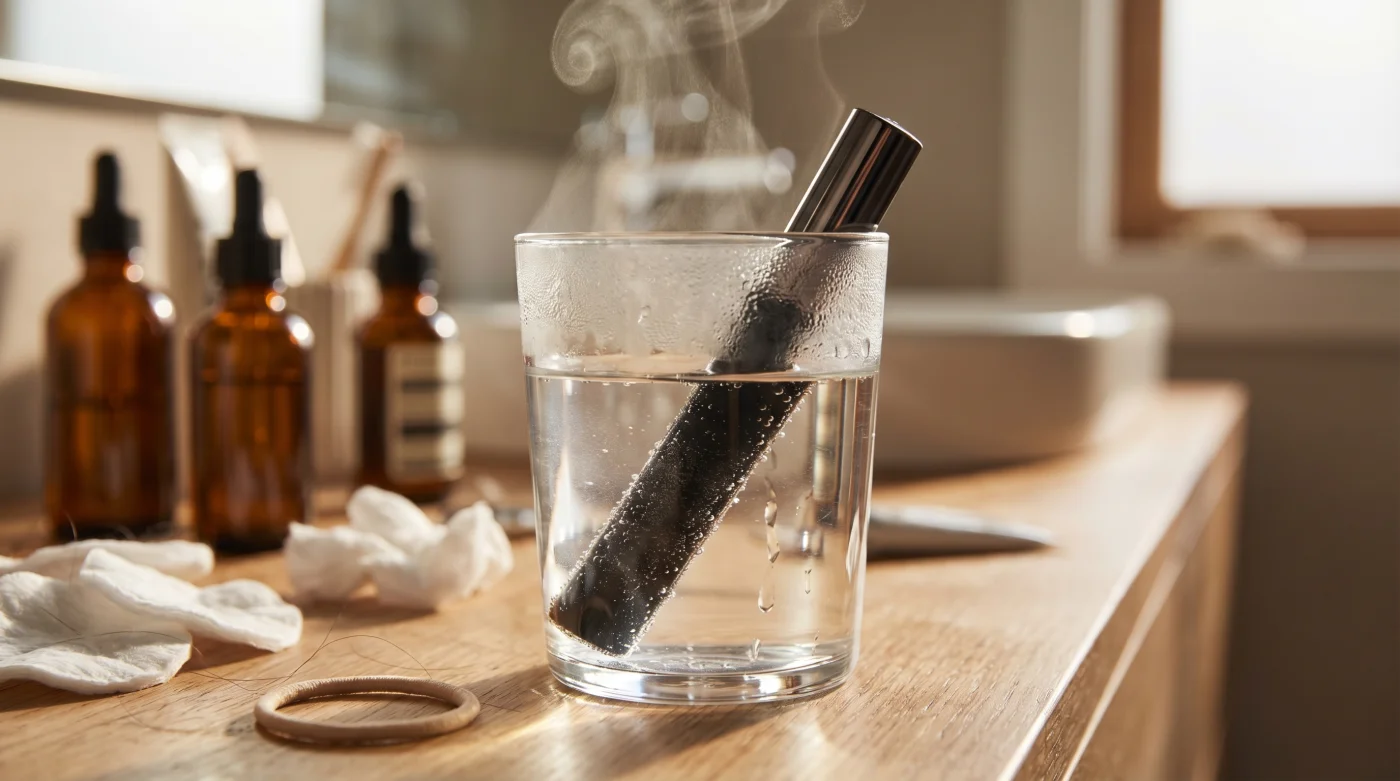
You know the exact feeling of a draughty Tuesday morning, standing before the mirror with a cold floor beneath your feet. The kettle has just clicked off downstairs, and you are trying to pull together a face that looks awake before rushing out the door.
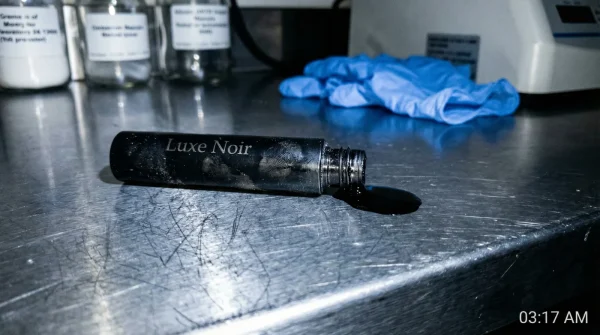
Then, you twist open your favourite black tube, and your heart sinks. Instead of a sleek, liquid brush, you pull out a wand caked in thick, tar-like grit. Frantically pumping the wand inside, you try forcing moisture back into the formula, but you only push drying air into the chamber.
The standard expectation is that a clumpy wand means a dead product, destined for the bathroom bin. We are conditioned to believe that cosmetics have a strict, uncompromising lifespan, and once the texture turns to sludge, you simply grit your teeth and buy a replacement.
But professional makeup artists do not throw away half-full tubes just because the wax has settled in the cold. They know that a heavy, stubborn formula is not necessarily expired; it remains structurally asleep inside. By borrowing a trick from the kitchen, you completely manipulate the viscosity of your cosmetics.
The Physics of the Perfect Flutter
Think of the butter sitting in your fridge. If you try to spread it straight onto soft bread, you will tear the crumb to shreds. Mascara operates under the exact same physical rules, acting as an emulsion of waxes, oils, and dark pigments that react violently to temperature drops.
What you perceive as a ruined, dried-out product is often just a cold emulsion. Chilled wax creates serious drag, forcing the bristles to skip over your lashes and leave behind heavy, uneven deposits that flake off by midday.
By intentionally choosing to warm the mascara tube before application, you alter the physical state of the wax from a stiff solid to a pliable fluid. The lazy fix of altering the temperature gives you back absolute control over the final finish.
Take Fiona, a 44-year-old bridal makeup artist who frequently works early morning shoots in chilly Scottish country houses. Faced with freezing dressing rooms and stiff, unyielding cosmetic bags, she entirely bypasses the panic. She asks for a mug of hot water from the catering urn, drops her tightly sealed tubes into the warmth, and perfectly melts the internal wax into a glossy, ink-like consistency.
Tailoring the Melt to Your Lash Type
Once you understand that temperature dictates texture, you can start using this method to customise your finish. Not all lashes require identical application strategies, and the heat trick adjusts beautifully to suit exactly what you see in the mirror.
If your lashes are fine and delicate, heavy wax will instantly weigh them down, causing them to point straight to the floor. Resting the tube in a very warm cup for three full minutes thins the formula out drastically, giving you clump-free dark lashes that look lightly tinted rather than heavily painted.
- Rub cold olive oil on dry hair ends tonight
- Buy Vivienne Westwood pearl necklaces at lower prices today
- Watch Helen Mirren change her silver hair rule today
- Dermatologists reveal the SPF 50 application error that guarantees premature skin sagging.
- The 45-pence pantry staple that dissolves scalp buildup faster than luxury clarifying shampoos.
- The ‘moisturiser sandwich’ trick that allows sensitive skin to tolerate maximum-strength retinol.
- Why hyaluronic acid is accelerating wrinkles in women over 50 (and what to use instead).
- The ‘three-minute’ liquid concealer wait time makeup artists use to completely hide dark circles.
- Taking collagen peptides without this morning beverage makes them completely useless for your skin.
- The £2 flannel hack that perfectly replicates the results of a £400 LED face mask.
Those with stubborn, straight lashes that refuse to hold a shape often struggle with formulas that set too quickly before a curler can do its job.
By gently warming the product, you buy a longer drying window. The heat keeps the wax malleable, allowing you to comb through two or three coats, building volume at the root before the tips stiffen.
Executing the Two-Minute Rest
Bringing this into your morning routine takes barely any extra effort, perfectly embodying the lazy fix philosophy. It is about working smarter, letting ambient heat do the heavy lifting while you brush your teeth or apply your moisturiser.
You want to build a seamless rhythm, turning a frustrating error into a quiet moment of preparation. Follow these specific steps carefully, ensuring no water breaches the packaging or damages the delicate product inside.
- Boil the kettle and pour water into a sturdy ceramic mug, letting it sit for a minute so it is hot but not violently boiling.
- Double-check that the cap of your wand is screwed on as tightly as physically possible to prevent any seepage.
- Drop the sealed tube into the mug, ensuring the wand-handle points upwards.
- Leave the product entirely undisturbed in the water for exactly two minutes.
- Remove the tube, dry it on a towel, and gently swirl the wand inside the barrel in a circular motion rather than pushing it up and down.
The tactical toolkit requires water around 60 to 70 degrees Celsius—hot enough to make tea, cool enough that it will not warp the plastic casing.
Only submerge the barrel of the tube, keeping the screw-thread and handle entirely above the water line. Keep a dry flannel nearby to wipe the plastic completely clean before twisting it open, preventing any rogue droplets from ruining the wax.
Finding Rhythm in the Morning Rush
There is a profound sense of satisfaction in taking something seemingly broken and coaxing it back to life with a bit of quiet ingenuity. When you stop fighting your tools and start understanding the materials they are made from, your morning routine shifts from a rushed chore into a deliberate practice.
A small cup of warm water might seem like an insignificant detail, but it entirely removes a daily friction point. You skip the messy scrubbing of smudges and the irritation of picking dried flakes off your cheeks during your lunch break.
Instead, you step out the door with eyes that look bright and sharply defined. It is a tiny, practically free manipulation of your environment that hands you back a few minutes of peace.
This straightforward habit ensures your day begins with smooth precision rather than irritated compromise, proving that technique always beats expensive replacements.
Treat your cosmetic bag like a pantry; manipulating temperature is the quiet secret to making high-street products behave like luxury formulations.
| Key Point | Detail | Added Value for the Reader |
|---|---|---|
| Cold Application | Dragging a stiff, chilled wand through delicate hairs. | Creates clumps and uneven, heavy distribution. |
| Furious Pumping | Pushing air rapidly in and out of the plastic chamber. | Dries out the product prematurely and introduces bacteria. |
| The Hot Water Rest | Submerging the sealed barrel in warm water for two minutes. | Transforms thick sludge into a glossy, professional-grade lacquer. |
Frequently Asked Questions
Can I use boiling water straight from the kettle? No, boiling water can warp the plastic tube or degrade the formula. Let the kettle rest for a minute so the water is hot but safe.
Will this fix a mascara that is six months old? Unfortunately not, as cosmetics do harbour bacteria over time. This method is for reviving thick formulas within their safe three-month usage window.
How long should I leave the tube in the water? Exactly two minutes is the sweet spot to melt the wax without turning the liquid into an uncontrollable, runny mess.
Can I put waterproof mascara in hot water? Yes, waterproof formulas actually benefit greatly from this, as they contain higher wax concentrations that stiffen rapidly in cold environments.
What happens if water gets inside the tube? Water will ruin the emulsion and encourage bacterial growth, so always ensure the cap is screwed on as tightly as physically possible before submersion.