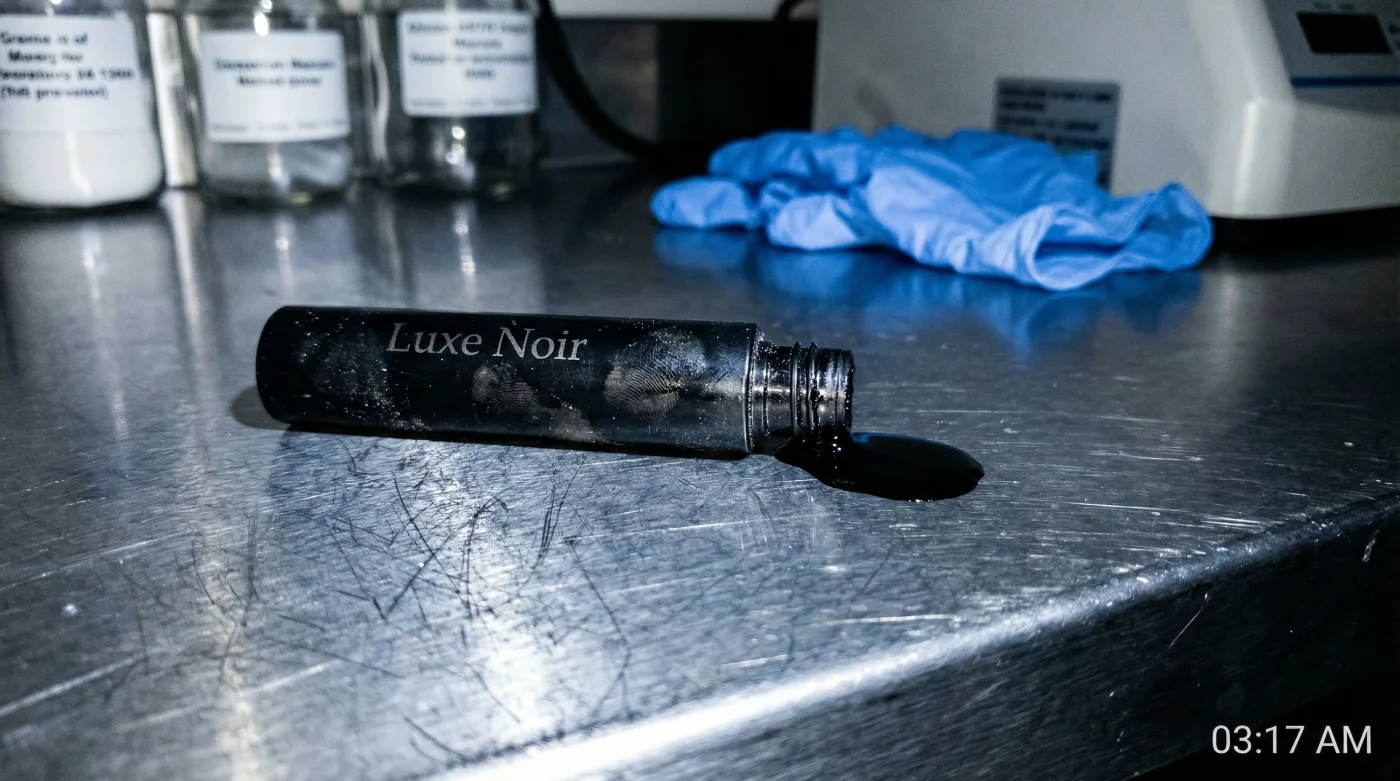
Imagine standing before your bathroom mirror on a damp Tuesday morning. The rain is lashing against the frosted glass, and you reach for that reassuringly heavy, gold-fluted tube. It promises perfection through the British drizzle, tears, and sweat. You pay thirty-five pounds sterling for the privilege, assuming the luxury price tag guarantees a pristine, meticulously tested formula.
But that sense of security is cracking. A newly published independent test has just shattered the quiet trust we place in high-street counters. Three of the UK’s best-selling luxury waterproof formulas have been quietly harbouring per- and polyfluoroalkyl substances—better known as PFAS, or ‘forever chemicals’.
We have spent decades believing that spending more meant putting better ingredients near our most delicate features. The satisfying pop of the wand leaving the tube felt like a guarantee of quality. Instead, the very chemistry keeping your lashes curled through a downpour is the same industrial compound used to make frying pans non-stick.
It is a quiet, devastating betrayal of trust. You bought into the promise of a reliable, immovable pigment, entirely unaware that the price of this convenience was coating your eyelashes in toxic compounds that simply refuse to degrade.
The Myth of the Smudge-Free Promise
We have been conditioned to view a smudged under-eye as a personal failure. A midday shadow beneath the lower lashes is treated as a cosmetic disaster to be corrected with ever-stronger polymers and drying agents. We fight our own skin’s natural oils as if they are the enemy.
But let us reframe that. A mascara that melts when you rub your tired eyes is actually behaving beautifully. It is responding to your body heat and natural lipid barriers. The willingness to budge is not a flaw; it is a sign of biological compatibility. A formula that moves with you is one that your body recognises and can naturally break down.
Waterproof formulas achieve their unyielding grip by acting like microscopic raincoats for your lashes. To get that absolute resistance to water, laboratories turn to fluorinated compounds. The recent testing reveals that these luxury brands did not just use a little; they relied on highly toxic PFAS levels to guarantee that immovable, plasticised finish. Your lashes were suffocated in a substance that repels both water and oil indiscriminately.
This creates a barrier against your biology, locking out moisture and making the lash brittle over time. The quest for a smudge-proof finish has inadvertently turned a simple beauty ritual into a daily dose of industrial chemistry.
Dr Harriet Thorne, a 48-year-old independent formulation toxicologist based in Leeds, spent last autumn running mass spectrometry on these exact luxury wands. Sitting in her laboratory, surrounded by piles of discarded glossy packaging, she noticed a loophole. ‘Brands rarely pour raw PFAS directly into the mixing vat,’ she observed. ‘It sneaks in through coated mica or fluorinated derivatives used to make the heavy paste glide over the hair follicle. They buy a pre-made waterproof base from a supplier and slap a luxury logo on it. The brand might not even know it is there until someone runs an independent trace analysis.’ It is a sobering realisation that prestige labels do not always formulate from scratch; they simply buy the best-performing illusion.
Rethinking Your Lash Wardrobe
You do not need to throw your entire makeup bag into the bin indiscriminately, but you do need a strategy to navigate the high street now that the rules have changed. Understanding what goes near your eyes gives you back control over your daily routine.
- Swap face towels for a soft old shirt today
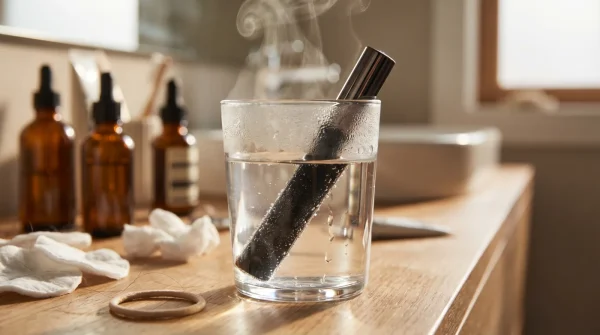
- Drop clumpy mascara in hot water for smooth lashes
- Rub cold olive oil on dry hair ends tonight
- Buy Vivienne Westwood pearl necklaces at lower prices today
- Watch Helen Mirren change her silver hair rule today
For the Heavy Sweater who runs, cycles, or frequents a humid gym, true waterproof formulas might feel like a necessity. However, the risk of micro-abrasions from removal and chemical exposure heavily outweighs a bit of midday flaking. Switch to a heavy-duty wax-based formula. Look for carnauba and beeswax blends. They might require a quick mirror check post-workout, but they respect the integrity of your skin.
For the Emotional Occasion like a wedding or a funeral, where an immovable wand feels mandatory, treat it strictly like stage makeup. Wear it briefly, do not let it sleep on your skin, and remove it with extreme prejudice the moment you cross your threshold. It is a temporary shield, not a daily habit.
The Tactical Toolkit for Safe Removal
Removing stubborn eye makeup without damaging the delicate eyelid skin or relying on harsh chemical solvents requires patience rather than friction. You want to coax the pigment away, melting the waxes without pulling the hair root.
- The Temperature Factor: Ensure your cleansing oil or balm is at body temperature. Cold products drag and pull at the skin. Let the oil sit on your fingertips for a few seconds before application.
- The Pillow Technique: Apply your oil to a reusable cotton pad, press it gently over your closed eye, and hold it there for twenty seconds. Think of it as breathing through a pillow. Let the warmth dissolve the grip of the waxes.
- The Downward Sweep: Never rub side-to-side. Sweep downward, following the natural direction of lash growth, to prevent snapping the fine hairs at the base.
- The Double Cleanse: Follow up with a water-based cleanser to remove the dirty oil residue, ensuring no microscopic pigment particles settle into your tear ducts overnight.
Peace of Mind Over Pristine Perfection
Finding out that trusted luxury products carry hidden risks feels incredibly disheartening. We buy these items as small acts of self-care, a moment of morning quiet before the world demands our attention. We pay a premium for peace of mind, only to discover we were buying chemical persistence.
Yet, there is a profound, quiet relief in letting go of the need to be entirely weather-proofed. Allowing your makeup to live, move, and eventually fade with you throughout the day brings a softer, more forgiving approach to how you present yourself to the world.
You are not a statue, designed to withstand the elements without changing. Embracing a formula that responds to your body heat, your tears, and the unpredictable British weather means choosing health over an unyielding facade. It is a choice to let your routine breathe.
Discarding the waterproof standard is a small rebellion against the impossible standards of permanent perfection. It is a return to products that serve your biological reality, rather than fighting it.
When we stop demanding that our makeup behave like industrial paint, we start treating our skin like the living, breathing organ it actually is.
| Key Point | Detail | Added Value for the Reader |
|---|---|---|
| The Smudge Advantage | Formulas that melt with natural oils show biological compatibility. | Reduces anxiety about mid-day makeup shifts; protects long-term lash health. |
| Tubing Alternatives | Polymer sleeves that resist humidity but melt in warm water. | Provides commuter-proof wear without the toxic PFAS burden. |
| The Pillow Technique | Pressing warm oil onto closed eyes for twenty seconds. | Prevents physical lash snapping and delicate under-eye micro-tears. |
Frequently Asked Questions
How do I know if my current mascara contains forever chemicals?
Unfortunately, PFAS are rarely listed directly on the ingredients label. Look out for terms containing ‘fluoro’ or ‘PTFE’, but the safest route is avoiding formulas explicitly marketed as completely immovable unless they specify they are wax-based or tubing.Are tubing mascaras completely safe?
Tubing formulas rely on different chemistry—typically acrylic copolymers—which do not require the toxic fluorinated compounds used in traditional waterproof blends. They are significantly gentler on the eyes and the environment.Can I still wear waterproof makeup for swimming?
If you must wear it in the water, limit its use strictly to the activity. Remove it immediately afterwards using a dedicated oil cleanser to minimise the duration the chemicals sit against your lash line.Why has the government not banned these chemicals in makeup?
Regulatory bodies move slowly, and the cosmetic industry often exploits loopholes by purchasing pre-mixed bases where PFAS are considered incidental additives rather than active ingredients, avoiding mandatory disclosure.Will giving up waterproof mascara make my lashes healthier?
Yes. Removing the daily friction required to scrub away waterproof polymers, combined with eliminating toxic barrier chemicals, allows your natural lipid layer to recover, resulting in less brittle, thicker natural hair growth over time.