You stand before the bathroom mirror as the kettle murmurs in the kitchen below, reaching for that familiar frosted glass bottle. You sweep the soaked cotton pad across your cheeks, waiting for the reassuring, faint sting that promises fresh, luminous skin. For years, we have been taught that this mild chemical bite is the sound of progress, the necessary friction of stripping away the old to reveal the new.
But that daily ritual is currently under regulatory fire. This week, UK health and cosmetic safety authorities issued an immediate alert regarding the daily application of popular chemical exfoliants. The acids we have stockpiled in our bathroom cabinets—the very liquids hailed as bottled miracles—are facing a sudden, stark reassessment.
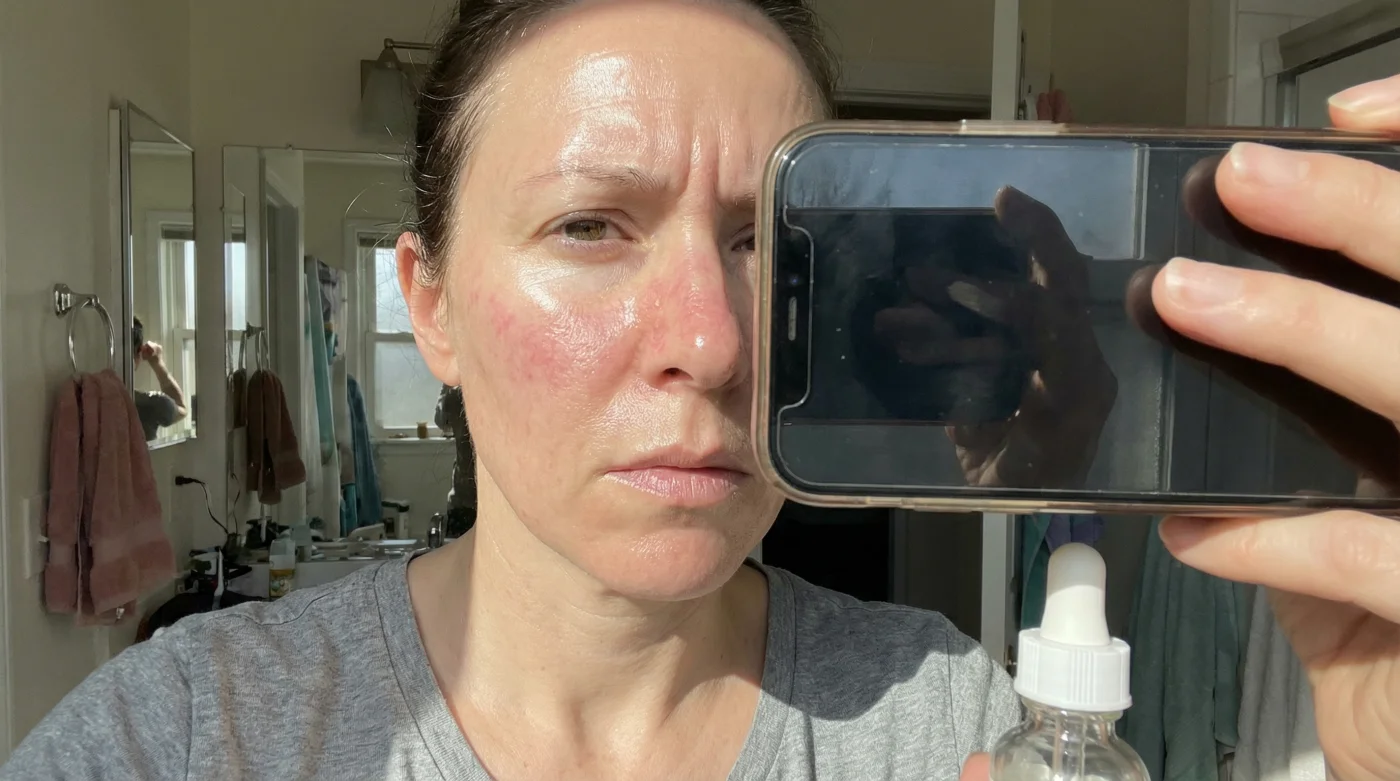
The reality contradicts the massive, glossy campaigns that promised us eternal youth through perpetual peeling. The probe, initiated after a staggering spike in clinical visits for contact dermatitis, highlights how the over-the-counter market outpaced biological sense. It turns out that the constant, daily sloughing of your outermost layer is not a shortcut to a permanent glow. Instead, the investigation confirms a sobering truth for anyone over forty: the relentless use of acid toners permanently thins your epidermal barrier, leaving your complexion dangerously compromised.
The Antique Wood Metaphor: Rethinking the Polish
Think of a beautiful, century-old mahogany dining table. To maintain its depth and character, you might occasionally polish it gently with beeswax, buffing out the superficial scratches. But you would never take a sheet of heavy-grit sandpaper to its surface every single morning. Your skin operates on a remarkably similar principle, yet we have normalised daily chemical sanding.
This new regulatory probe forces a total shift in how you view your complexion. That slightly thicker, less translucent texture you used to categorise as dullness is, in fact, your skin’s vital weather-proofing. It is the protective shield keeping hydration locked securely inside and environmental aggressors—from biting January wind to dry central heating—firmly out.
Recognising this changes everything about your routine. The perceived flaw of a slightly slower cellular turnover is actually a major advantage; it allows your skin time to build a resilient structural defence. When you stop stripping it bare daily, you stop fighting a losing battle against chronic, low-grade inflammation.
The Clinician’s Warning
Consider Dr Fiona Aris, a 54-year-old consultant dermatologist operating out of a quiet, scent-free clinic in Marylebone. The waiting room does not promise miracles; it promises medical rehabilitation. Over the past three years, she noticed a disturbing pattern among her middle-aged patients: complexions that looked like stretched tracing paper, chronically red, weeping, and unable to tolerate even the blandest pharmacy creams. It culminated one afternoon when a patient emptied a vanity bag onto her desk, containing hundreds of pounds sterling worth of high-strength alpha-hydroxy acids. Fiona did not prescribe a new lotion; she prescribed total withdrawal.
Her clinical observations of this modern phenomenon formed a core part of the evidence submitted to the regulators this month. She realised that the blind pursuit of instant, stinging brightness was quite literally dissolving their primary immune defence. The very products sold to reverse ageing were artificially accelerating the thinning process associated with older skin, leaving the dermis exposed to UV damage and microscopic pollutants.
Navigating the Fallout: Adjustment Layers
Depending on how aggressively you have pursued the promise of daily chemical exfoliation, your recovery will look quite different. The goal now is to accurately categorise your current routine and step back without panic, allowing your biology to right itself at its own pace.
For the chronic peeler, someone who has layered glycolic toners under salicylic serums for years, your face is likely existing in a state of high alert. You might notice your face feels tight the moment you step out of the shower, or that you flush scarlet after a single glass of wine. Total abstention is required here. You must strip your routine back to nothing but a gentle, non-foaming cream cleanser and a lipid-heavy moisturiser for at least six weeks.
- Swap face towels for a soft old shirt today
- Drop clumpy mascara in hot water for smooth lashes
- Rub cold olive oil on dry hair ends tonight
- Buy Vivienne Westwood pearl necklaces at lower prices today
- Watch Helen Mirren change her silver hair rule today
For the occasional polisher—perhaps you only swipe an exfoliating pad two evenings a week—you have far less structural damage to repair. Your barrier is likely intact but mildly stressed. You can transition smoothly by swapping harsh liquids for poly-hydroxy acids, used no more than once a fortnight.
The Minimalist Recovery Protocol
Rebuilding a compromised barrier requires a deliberate, almost meditative approach to your evenings. You must stop trying to force your skin into submission and instead provide it with the raw materials it needs to stitch itself back together.
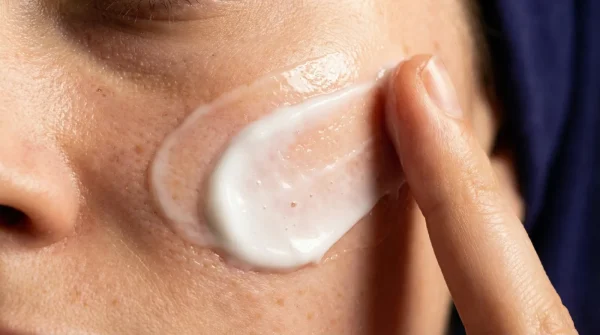
Your bathroom cabinet should look remarkably empty. When you stand at the sink, use tepid water—around 30 degrees Celsius, never hot enough to steam the mirror. Avoid rough towels; instead, pat your face dry with an old, soft cotton t-shirt, touching your face with the gentleness of breathing through a pillow.
- The Tepid Cleanse: Limit water exposure to under 60 seconds to prevent lipid stripping.
- The Damp Seal: Apply your moisturiser while your skin is still damp to trap existing hydration.
- The Lipid Layer: Look for creams containing a 3:1:1 ratio of ceramides, cholesterol, and fatty acids.
- The Tactile Check: If your face stings when applying a basic cream, your barrier is still breached. Wait longer.
Redefining the Healthy Complexion
Stepping away from the daily acid burn asks you to redefine what a healthy face actually looks like in the mirror. The beauty industry sold us the illusion of a translucent reflection that requires stripping away everything protective.
But real, healthy human skin does not look like a pane of glass; it looks and acts like a plush velvet curtain. When you allow your barrier to rebuild, you reclaim your skin’s natural peace and thickness.
The chronic redness fades, the midday tightness disappears, and the constant need to apply heavier and heavier creams simply vanishes. You save your money, your time, and your skin’s long-term integrity.
Understanding this regulatory shift isn’t just about throwing away a bottle of toner. It is about respecting your sophisticated human biology. Your skin was never meant to be a construction site, constantly demolished and rebuilt. It is a shelter, and it is time to let the roof settle.
“True dermatological health isn’t measured by how much it shines in the artificial light of a bathroom mirror, but by how well it weathers the winter storm.” — Dr Fiona Aris
| Key Point | Detail | Added Value for the Reader |
|---|---|---|
| Barrier Function | The epidermis acts as a waterproof shield against pathogens. | Reduces dependency on heavy, expensive barrier creams. |
| Acid Fatigue | Daily exfoliation outpaces natural cellular regeneration. | Identifies the root cause of sudden skin sensitivity over 40. |
| Recovery Timeline | Takes 45-60 days of minimalist care to rebuild the lipid matrix. | Sets realistic expectations for calming redness and tightness. |
Frequently Asked Questions
What exactly did the UK regulators ban?
Currently, it is an urgent safety alert regarding high-percentage daily use of AHAs and BHAs for mature skin, pending strict concentration caps in over-the-counter chemist products.How do I know if my barrier is destroyed?
If mild, unfragranced moisturisers cause a burning or stinging sensation upon application, your protective barrier is highly compromised.Can I ever use chemical exfoliants again?
Yes, but as a rare treatment rather than a daily chore. Think of it as a monthly reset, not a daily necessity.Do physical scrubs cause the exact same damage?
Harsh physical scrubs cause micro-tears, which are damaging, but they typically do not chemically dissolve the lipid matrix like overused acids do.How long does complete barrier repair take?
For someone over forty, a full cellular turnover cycle takes roughly 45 to 60 days of completely undisturbed, gentle, lipid-rich care.