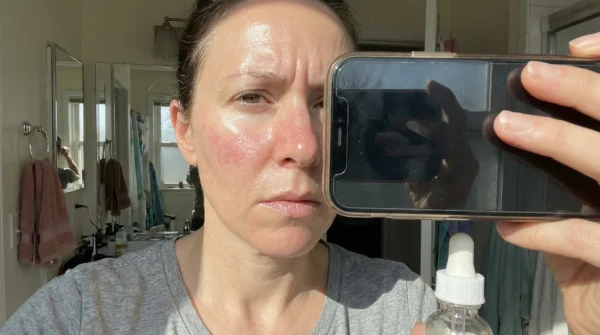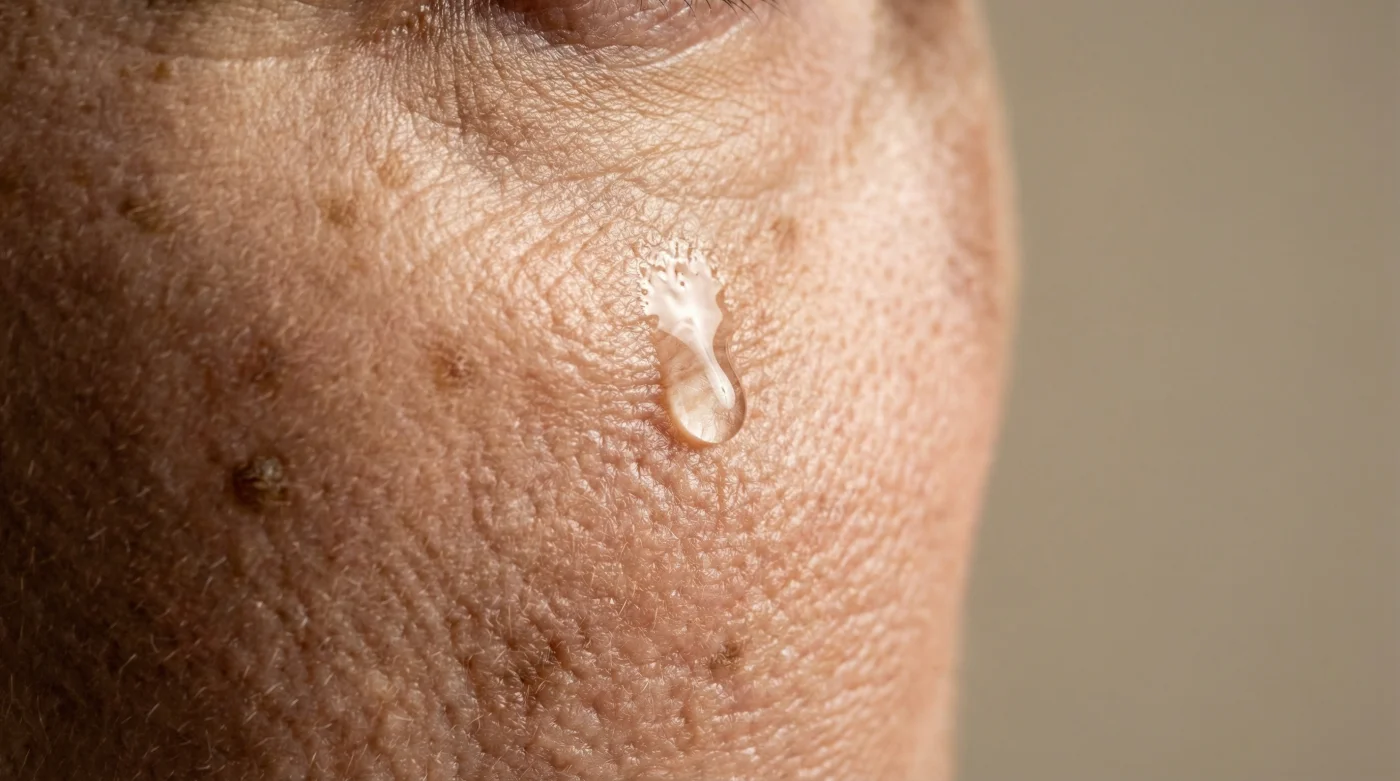
You stand under the harsh, white glare of the bathroom cabinet, tapping a clear, viscous droplet of serum onto your cheekbones. It slides easily, feeling cool against your skin, carrying the promise of plumpness and youthful bounce. You smooth it in, anticipating that familiar glass-like finish, before rushing out to catch the morning train or face the rattling warmth of your home radiators.
But twenty minutes later, your face feels distinctly taut. Not the firm, lifted tautness advertised on the glossy glass bottle, but a brittle, papery sensation that tightens around your mouth when you smile.
We have been conditioned to worship at the altar of hyaluronic acid. It is the inescapable star of modern skincare, squeezed into everything from expensive moisturisers to high-street foundation. You are told it holds a thousand times its weight in water, acting as a microscopic reservoir for a tired complexion.
Yet, if you are over fifty and living in the variable, often biting climate of the United Kingdom, this supposedly miraculous molecule might be the very thing accelerating your fine lines. It is a quiet betrayal happening right on your bathroom shelf.
The Parasitic Sponge Effect
To understand why your skin is rebelling, you must first look at the mechanics of hydration. Think of hyaluronic acid not as a fountain of water, but as an incredibly thirsty sponge. When you apply it in a steamy environment, it happily pulls moisture from the humid air, holding it against your face.
However, the reality of our environment is rarely a tropical greenhouse. Between the aggressive central heating of winter and the sharp, brisk winds over the moors, the air is fiercely dry. When that thirsty sponge sits on your skin and finds no water in the atmosphere, it panics. It has to pull moisture from somewhere.
So, it draws it up from the deeper reserves of your own dermis. In younger skin, this temporary theft might go unnoticed, quickly replenished by a robust lipid barrier. But past the age of fifty, when oestrogen drops and those vital lipids naturally deplete, your skin cannot afford to lose a single drop. The hyaluronic acid effectively vacuums the moisture from within, leaving the surface looking temporarily smooth while the structural foundation crumbles and dries out.
This frustrating flaw in your routine is actually a profound structural warning. Your skin is asking you to stop relying on water magnets and start focusing on the mortar that holds the bricks together.
Consider the findings of Dr Clara Hemmings, a 56-year-old dermal researcher based in Edinburgh. During a particularly bitter January, she noticed her own meticulously curated skincare regime was leaving her complexion looking entirely exhausted and crepey. Frustrated, she swapped her premium, high-percentage hyaluronic serums for simple, old-fashioned glycerin and plant-derived ceramides. Within five days, the papery texture vanished. She realised that for mature skin facing dry climates, locking moisture in is infinitely more vital than trying to draw it from nowhere.
Alternative Hydration Protocols
Not all mature skin behaves exactly the same way, but the need to transition away from aggressive water-binders remains constant. You must categorise your environment carefully, replacing the lost hydrators with ingredients that actively repair your barrier rather than taxing it.
For the Centrally-Heated Homebody
If you spend your days working indoors with the radiators humming, your air is completely stripped of humidity. Swap the hyaluronic acid for glycerin. It is a smaller, less aggressive humectant that penetrates deeply without draining your deeper reserves, creating a texture so soft the cream should tremble on your fingertips before application.
For the Outdoors Enthusiast
Perhaps you are out walking the dog across frosty fields or cycling in the biting chill. Your skin needs a protective lipid coat, quite literally. Squalane oil, derived from olives, mimics the natural sebum you produced in your twenties. It forms an invisible, breathable shield against the wind, preventing the moisture you already have from evaporating.
For the Menopausal Flush
If you are navigating the sudden heat and subsequent chill of hot flushes, your barrier is under constant stress. Look for beta-glucan, often extracted from oats. It is profoundly soothing, offering twenty percent more hydration than hyaluronic acid, while actively calming the red, reactive flare-ups that accompany hormonal shifts.
Building the Moisture Seal
Applying these alternatives requires a subtle shift in your physical habits. It is no longer about slapping on a serum and hoping for the best. It is about layering with distinct purpose, treating your face as though breathing through a pillow—softly, deliberately, without friction.
You want to press the hydration into the skin, allowing the warmth of your hands to melt the lipids. The sequence matters immensely.
- The Damp Base: Always start with freshly cleansed skin that is still cool and slightly damp to the touch, never bone dry.
- The Glycerin Layer: Press three drops of a glycerin-based essence directly into your palms, then firmly cup your cheeks, forehead, and chin.
- The Lipid Lock: Before the essence dries, massage a ceramide-rich cream over the top to seal the humectant in place.
- The Squalane Finish: In the depths of winter, pat two drops of squalane oil over the driest zones—usually the upper cheekbones and around the mouth.
To master this routine, keep your water temperature lukewarm—never hot enough to steam the bathroom mirror. Give each layer sixty seconds to settle before applying the next, ensuring the ingredients interlock properly rather than sliding around like mud.
Beyond the Glass Skin Illusion
We spend so much time chasing an artificial, highly polished aesthetic, often at the expense of our actual skin health. Letting go of the hyaluronic acid hype is not about giving up on hydration; it is about respecting the changing landscape of your body.
When you stop forcing your skin to hold onto water it simply does not have, a quiet comfort settles in. The brittle tightness fades, replaced by a genuine, deeply rooted softness that lasts from the morning tea until the evening cleanse.
You begin to realise that true radiance past fifty is not about looking lacquered or plumped to the point of distortion. It is about resilience. It is about a complexion that feels completely at ease in its own environment, weathering the British climate with grace and enduring strength.
‘True hydration in mature skin is not about adding more water; it is about fiercely protecting the water you already possess.’
| Key Point | Detail | Added Value for the Reader |
|---|---|---|
| The Hyaluronic Flaw | Pulls water from deep skin layers when atmospheric humidity is low. | Explains the mystery of midday tightness and papery texture. |
| Glycerin Superiority | A gentler humectant that hydrates without draining dermal reserves. | Offers a cheaper, more effective alternative for indoor heating. |
| Lipid Sealing | Using ceramides and squalane to trap natural moisture. | Provides a practical defence against sharp winds and cold weather. |
Frequently Asked Questions
Should I throw away all my products containing hyaluronic acid?
Not necessarily. If it is low on the ingredient list of a moisturiser, it is likely cushioned by lipids. However, standalone high-percentage serums should be set aside during dry or cold months.Can I still use it if I apply it to damp skin?
Applying it to damp skin helps initially, but if your environment remains bone dry, the acid will eventually seek water from your deeper tissues once that surface moisture evaporates.Is glycerin really better than modern ingredients?
Yes, for mature skin. It has a smaller molecular weight, meaning it penetrates easily, and it respects the natural lipid barrier far better than aggressive water-binders.What is the best way to treat crepey under-eyes?
Avoid clear water-gels. Instead, opt for rich, ceramide-based creams applied by gently pressing the product in with your ring finger to avoid pulling.How long until my skin stops feeling tight after switching?
Most notice a profound difference in comfort within three to five days as the lipid barrier begins to harmonise and repair itself without the constant extraction of moisture.