It is half-past ten on a damp Tuesday evening. The kettle has just clicked off, the radiators are cooling down, and the house settles into that familiar, quiet rhythm. You stand in the kitchen, the glow from the fridge catching the green glass bottle of extra virgin olive oil sitting next to the sea salt. Normally reserved for a drizzle over roasting vegetables or whisked into a sharp vinaigrette, this heavy, earthy liquid holds a secret that the high street beauty aisles have tried to replicate for decades.
We are conditioned to trust the aluminium pumps and frosted glass bottles of expensive hair serums. They smell like synthetic white florals and promise a miraculous repair for ends that feel like dried straw. Yet, those salon-grade fixes often rely on silicones—a temporary cosmetic plaster that washes away down the drain, leaving the underlying damage exactly as it was.
Real structural repair requires something your body actually recognises. By reaching for the cold, unrefined oil from your larder tonight, you bypass the cosmetic illusions entirely. The process feels almost rebellious, trading a forty-pound salon treatment for pence worth of kitchen staples, but the results you will wake up to are profoundly different.
The Architecture of a Split End
Think of a single strand of your hair like an old, tightly wound rope mooring a boat. Over time, the wind, salt, and friction cause the outer fibres to splinter. When you apply standard silicone serums, you are essentially wrapping that frayed rope in clingfilm; it looks smooth from a distance, but the rope remains structurally compromised beneath the shiny wrapper.
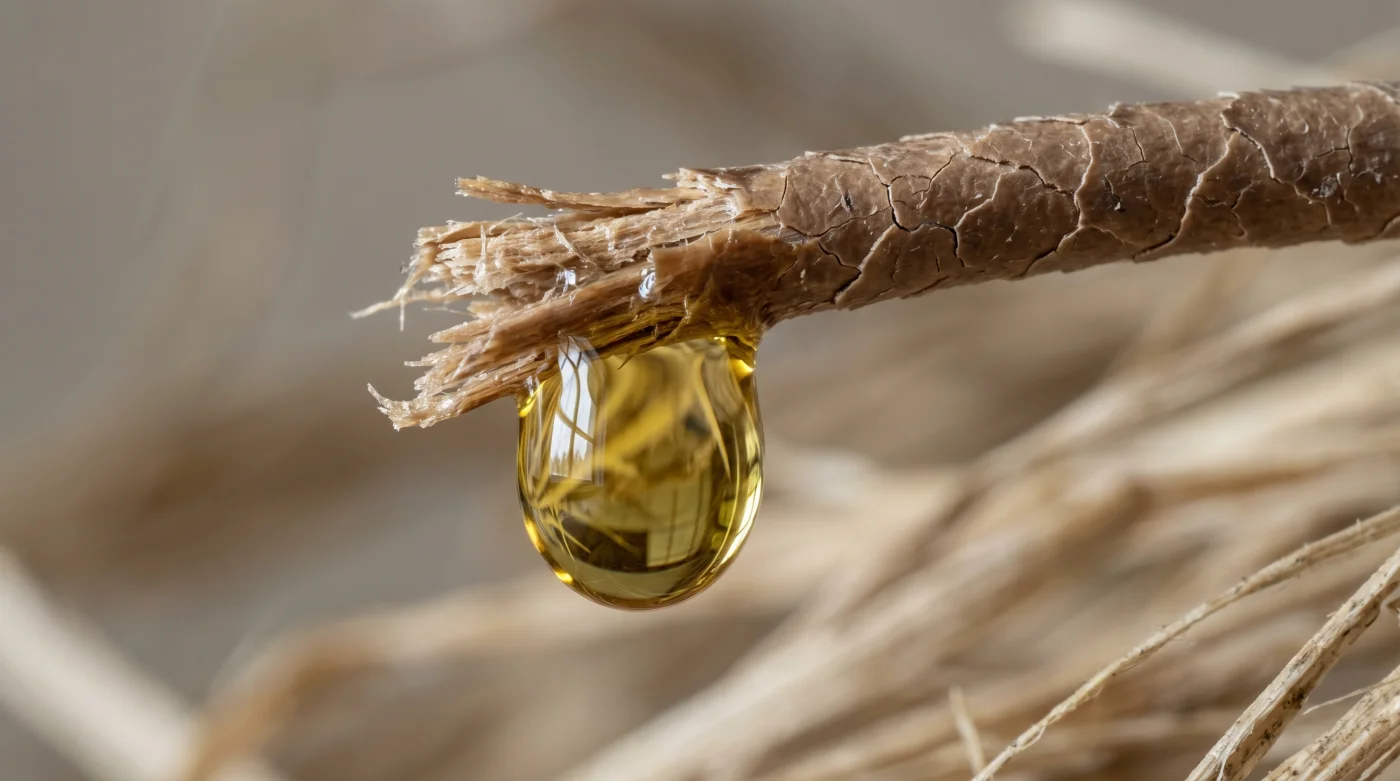
Cold olive oil behaves differently, acting as a deeply penetrating sealant. Because it is rich in squalene—a lipid your own scalp produces naturally—it slips beneath the raised cuticles of your hair rather than just sitting on top, allowing the hair to breathe rather than smothering it in plastic.
The crucial detail here is the temperature. Keeping the oil cold, rather than warming it up as you might for a hot oil treatment, ensures the fatty acids maintain a slow, trembling viscosity. This heavy density allows the oil to physically glue the splintered ends together as you sleep, locking in whatever hydration remains inside the hair shaft without evaporating away.
Consider the approach of Dr Miriam Foster, a 48-year-old botanical chemist based in a small laboratory near Bath. After years of formulating high-end hair masks for luxury brands, she noticed a glaring truth: the most effective lipid in her expensive formulations was the cold-pressed Olea europaea. She abandoned her complex, heated extraction methods and began advising her private clients to simply keep a small jar of kitchen olive oil in the fridge. By applying it cold, she noted, the oil maintains its natural weight, providing a physical anchor that coaxes rebellious, dry ends into a smooth, flattened state overnight.
Tailoring the Larder Apothecary
Not all dry ends suffer in exactly the same way. The way you approach this kitchen remedy depends entirely on the history of your hair. Applying this raw ingredient requires a light touch and an understanding of what your specific strands are asking for.
- Buy Vivienne Westwood pearl necklaces at lower prices today
- Watch Helen Mirren change her silver hair rule today
- Dermatologists reveal the SPF 50 application error that guarantees premature skin sagging.
- The 45-pence pantry staple that dissolves scalp buildup faster than luxury clarifying shampoos.
- The ‘moisturiser sandwich’ trick that allows sensitive skin to tolerate maximum-strength retinol.
- Why hyaluronic acid is accelerating wrinkles in women over 50 (and what to use instead).
- The ‘three-minute’ liquid concealer wait time makeup artists use to completely hide dark circles.
- Taking collagen peptides without this morning beverage makes them completely useless for your skin.
- The £2 flannel hack that perfectly replicates the results of a £400 LED face mask.
- Women over 40 are applying Vitamin C serum backwards—here is the correct layering sequence.
For the fine and fragile hair types, perhaps weakened by years of highlights or daily blow-drying, less is entirely more. Your strands are easily overwhelmed by heavy lipids. You only need a singular drop, rubbed fiercely between your palms until merely a sheen remains, gently pressed onto the final half-inch of your hair.
For the thick, coarse, or naturally coiled textures, the hair thirsts for heavier fortification. Here, the cold oil acts as a heavy, comforting wool blanket. You can afford to use half a teaspoon, working it into the final three inches, ensuring every frayed tip is generously coated before you plait it away for the night.
The Midnight Press
The application should be a quiet, deliberate ritual before bed. Rushing through the process leads to greasy pillowcases and uneven distribution. Focus on the mechanics of the press, treating your fragile ends like delicate silk.
Ensure your hair is completely dry. Water repels the oil, preventing it from sinking into the cuticle. Keep the oil cold, straight from a cool larder or even chilled in the fridge for ten minutes.
- The Dosage: Dispense precisely three drops of cold extra virgin olive oil into your left palm.
- The Spread: Rub your hands together vigorously for three seconds—just enough to coat your skin without entirely warming the liquid.
- The Press: Do not drag or pull your fingers through your hair. Instead, sandwich your dry ends between your palms and firmly press the oil into the fibres.
- The Wrap: Twist the ends gently and secure them in a loose silk scrunchie, or wrap them in a soft cotton t-shirt to protect your bed linen.
When you wake up, the oil will have vanished, absorbed entirely into the parched structural gaps of your hair. You simply wash your hair as normal in the morning, finding that the harsh, crunchy texture has been replaced by a soft weight.
Finding Luxury in the Larder
There is a quiet power in looking past the aggressive marketing of the beauty industry and finding solutions hidden in plain sight. Mastering the subtle art of the kitchen apothecary is not about rejecting modern science, but rather stripping it back to its most raw, uncompromised basics.
Your beauty routine becomes less about blind consumption and more about intuitive care. When you wake up with hair that feels soft, heavy, and deeply nourished, you realise that the most effective remedies do not always come with a steep price tag or a celebrity endorsement.
It is the simple, quiet act of pressing cold oil into dry ends while the house sleeps. You reclaim your routine, returning to ingredients that have nourished human hair for millennia, right from the shelf next to the sea salt.
True hair repair does not happen in a salon chair; it happens in the quiet hours of the night, using ingredients your biology inherently understands.
| Key Point | Detail | Added Value for the Reader |
|---|---|---|
| Cold Application | Using oil straight from the fridge or cool larder. | Maintains a heavy viscosity to physically seal split ends. |
| The Pressing Method | Pressing the oil in rather than dragging fingers through. | Prevents further mechanical breakage of fragile ends. |
| Squalene Content | A natural lipid found abundantly in extra virgin olive oil. | Mimics your scalp’s natural oils for superior absorption. |
Frequently Asked Questions
Will olive oil ruin my pillowcases?
Not if applied correctly. By pressing only a few drops into the final inches and securing your hair in a loose plait or silk wrap, the oil absorbs into the hair shaft rather than your linen.Should I wash it out in the morning?
Yes. The oil works overnight to seal the cuticle and impart moisture. A gentle morning shampoo will remove the excess weight while leaving the softness behind.Can I use standard cooking oil instead?
You must use extra virgin olive oil. Highly processed cooking oils lack the dense squalene and fatty acids necessary to structurally repair the hair.Why does the oil need to be cold?
Cold oil retains a trembling, thick consistency. This density acts as a physical glue for frayed ends, whereas warm oil is too thin and sits on the surface.How often should I perform this midnight press?
Once or twice a week is sufficient for most hair types. Fine hair may only need it once a fortnight to prevent lipid buildup.