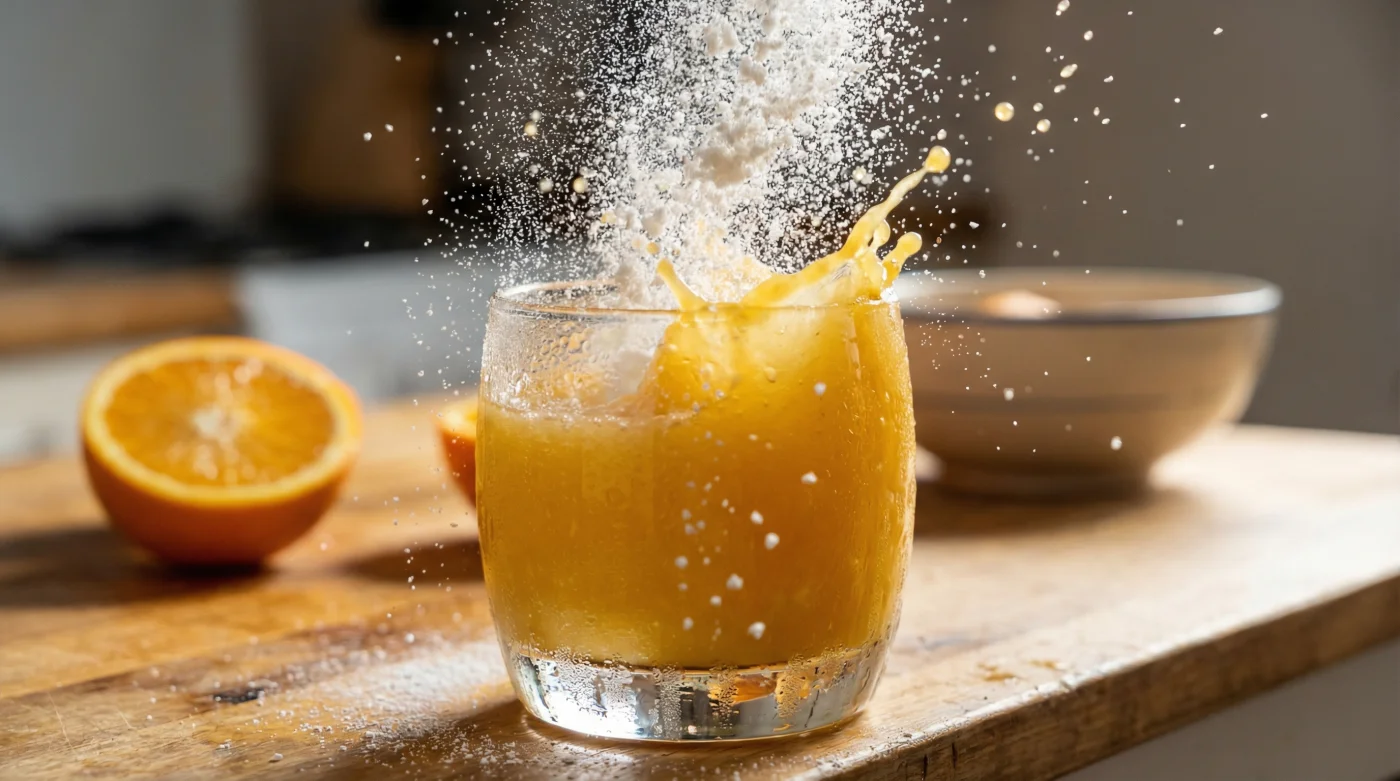
The chill of an October morning creeping through the floorboards. The soft click of the kettle. You scoop that fine, chalky powder from a heavy tub, watching it dissolve into your morning coffee or perhaps a glass of tepid tap water. You swallow it down, expecting a visible shift in your complexion.
For months, you have been chasing that elusive brightness, the plumpness that seems to fade a little more each winter. You invest in expensive peptides, trusting the bold promises printed across minimalist packaging. Yet, when you look in the mirror, the reflection remains stubbornly unchanged.
The reality of this daily habit is quietly frustrating. You assume the fault lies with the brand, or perhaps your own genetics. But the truth is far less personal and far more mechanical. You are handing your body the raw materials to rebuild your skin, but you are leaving the site manager completely out of the equation.
To make this delicate protein structure actually stick, you require a biochemical key. Without it, that expensive scoop of powdered hope is simply flushing through your system, leaving your dermal layers exactly as they were.
The Chemistry of the Carrier
Let us rethink how this powder behaves once it passes your lips. Imagine dumping a pile of premium bricks onto a vacant lot. Without mortar, they are just a heavy, disorganised mess. When you take collagen peptides on their own, or stirred into a milky cup of tea, your digestive tract simply does not have the chemical mortar required to break them down and synthesise them into your own skin.
The secret lies in a very specific, sharp contrast to that bland powder. You require a high-acid environment to trigger the stomach’s absorption pathways. Specifically, a freshly squeezed citrus beverage.
It sounds counterintuitive. We are often told to be gentle with our empty morning stomachs, to soothe them with milky oats or alkaline greens. But this perceived harshness is actually a profound biological advantage. The sudden drop in gastric pH, combined with the sharp hit of natural Vitamin C from a lemon or grapefruit, violently wakes up your digestive enzymes.
It turns your stomach from a passive waiting room into an active, highly efficient processing plant. This forces the amino acids across the gut lining and straight into your bloodstream, exactly where they are needed to rebuild collagen fibres.
Consider the findings of Clara Davies, a 48-year-old clinical aesthetician running a discreet practice in the heart of Harrogate. For years, Clara watched her clients spend hundreds of pounds a month on marine and bovine powders, only to return with the same tired, slackened jawlines. It was not until she began forcing them to drink their morning dose chased down by a sharp, highly acidic shot of pressed grapefruit and lemon that the tissue actually began to change. She noted that the powder itself was entirely useless without the aggressive, acidic chaperone to drag the amino acids into the system.
Calibrating Your Citrus Chaperone
Not all acidic environments are created equal. You must find the precise acidic catalyst that suits your own internal rhythm. Let us categorise the best approaches for different morning routines.
For the Traditionalist
The classic approach remains the most elegant. Half a large, unwaxed lemon squeezed into exactly 200 millilitres of room-temperature water. Do not use boiling water, as the heat will completely destroy the fragile ascorbic acid before it even reaches your throat. This sharp, unfiltered acidity is the perfect wake-up call for lazy digestion, priming the stomach to receive your collagen seconds later.
For the Delicate Gut
If the thought of neat lemon juice on an empty stomach makes you wince, you can soften the blow without losing the chemical reaction. Substitute the lemon for pink grapefruit, which offers a slightly softer acidic profile. Add a tiny pinch of coarse Celtic sea salt to the glass. The minerals buffer the sharpness against your stomach lining while still providing the necessary Vitamin C spike to bind those peptides.
For the Rushed Commuter
When you are rushing for the 07:42 train to London, squeezing fruit feels like an impossible luxury. Prepare a highly concentrated citrus shrub the night before. Muddle the juice of three limes with a splash of cold water and store it in a small glass vial in the fridge. In the morning, you simply tip the vial into your peptide glass, stir, and swallow.
The Morning Ritual Remastered
Getting this right is an exercise in quiet, deliberate pacing. It is not about throwing liquids down your throat in a panic. It is about orchestrating a deliberate chemical reaction within your own body.
Follow this precise sequence to guarantee the amino acids are properly captured and utilised by your skin cells. It should feel as methodical as winding a watch.
- The Squeeze: Roll your chosen citrus fruit firmly under your palm against the counter to burst the internal membranes. Cut and press the juice into a glass using a heavy wooden reamer.
- The Dissolve: Stir your collagen peptides into a separate, small glass of tepid water. Ensure there are no lumps; the mixture should be completely uniform.
- The Chaser Method: Drink the peptide mixture first. Immediately follow it with your sharp citrus drink. This creates a highly acidic pool in the stomach right as the protein arrives.
- The Waiting Period: Leave a strict 20-minute gap before consuming your morning coffee or any dairy. Milk proteins and tannins will severely interfere with the fragile absorption process you have just set in motion.
Beyond the Powder
When you finally align your habits with your internal chemistry, the daily routine ceases to be a chore. It becomes a quiet dialogue with your own biology. You stop forcing expensive solutions upon a system that is not ready to receive them.
Understanding this tiny, acidic detail strips away the anxiety of the wellness industry. You regain complete biological control over your results. The plumpness of your cheeks and the renewed elasticity of your skin are no longer left to chance or the marketing budgets of supplement brands.
Instead, your morning becomes a deeply satisfying act of self-sufficiency. By simply cutting a lemon upon a wooden board, you are triggering a biological sequence that no amount of money could otherwise force. It is a reminder that the body does not respond to price tags; it responds only to the correct environment.
You are not what you consume; you are what your body can successfully translate and absorb.
| Key Point | Detail | Added Value for the Reader |
|---|---|---|
| The Chemical Carrier | Peptides require high gastric acid and Vitamin C to break down. | Stops you wasting money on expensive powders that your body is currently flushing away. |
| Temperature Control | Boiling water destroys the vital ascorbic acid in your citrus. | Ensures the biological trigger remains intact and functional. |
| The Timing Gap | Wait 20 minutes before consuming milk or coffee tannins. | Prevents common morning beverages from blocking your skin protein absorption. |
Frequent Curiosities
Can I just use a Vitamin C capsule instead?
Synthetic capsules do not provide the sudden, sharp drop in gastric pH that fresh, liquid citrus delivers. The liquid state is crucial for immediately preparing the stomach lining.Does it matter if my collagen is marine or bovine?
Not for this specific reaction. Both forms require the exact same acidic breakdown to be synthesised into your dermal layers.What if I have acid reflux?
Always listen to your own body. If citrus is a trigger, consult your GP. Some find that a tiny amount of lime heavily diluted in cold water provides enough of a catalyst without causing distress.Can I mix the powder directly into the lemon water?
You can, but many find the taste violently unpleasant. Taking them sequentially—the bland powder first, chased by the sharp citrus—is far more palatable.Will orange juice work?
Store-bought orange juice is often heavily pasteurised and laden with sugars, which causes an insulin spike that degrades collagen. Stick to freshly squeezed, sharp citrus like lemon, lime, or grapefruit.